Sign Conventions
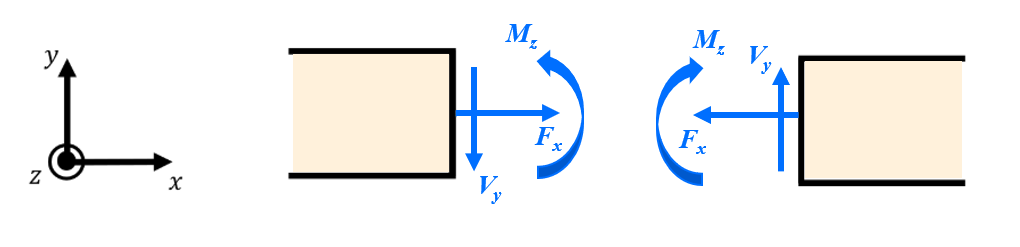
3D FBD Sign Convention
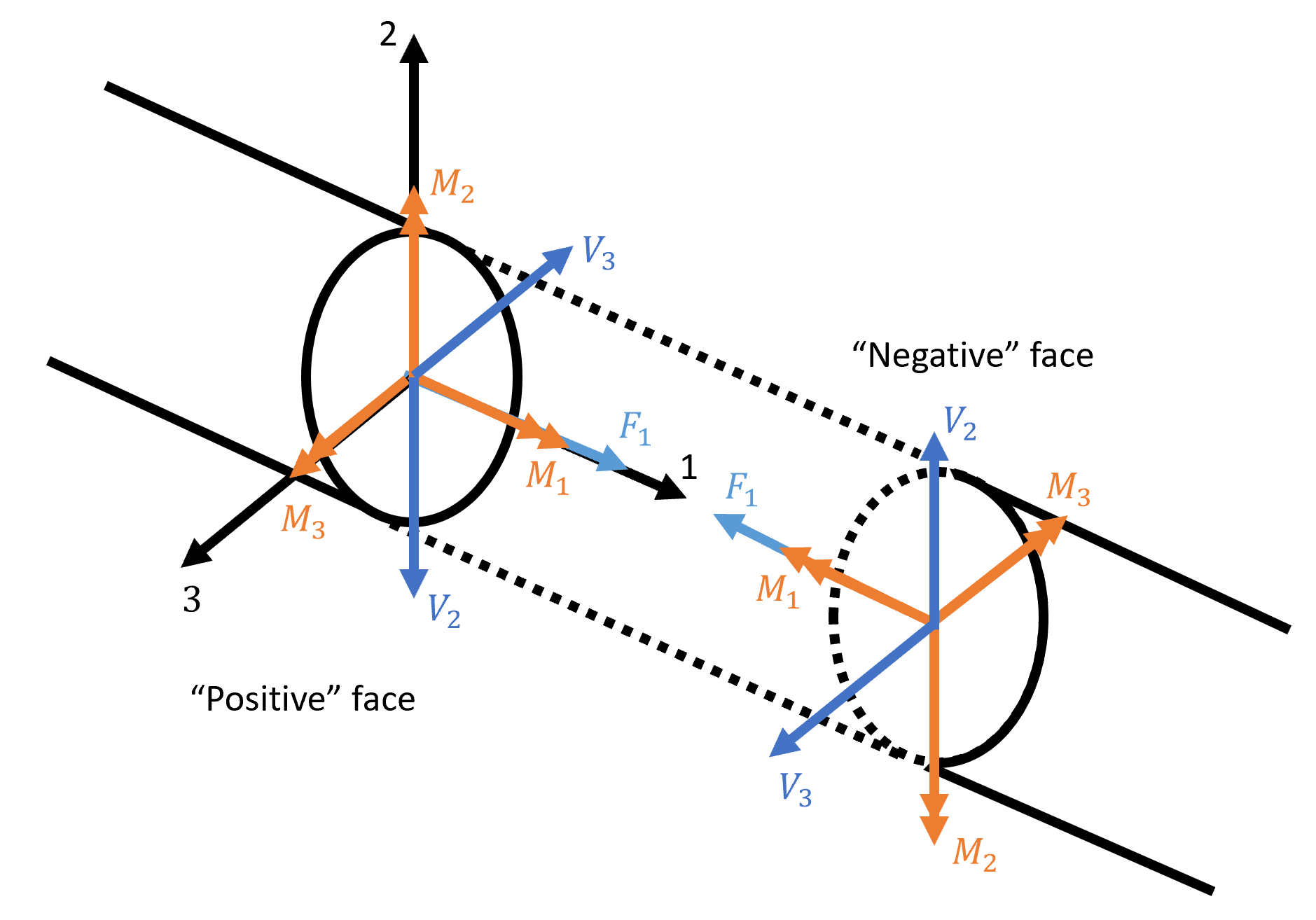
Positive Sign Convention for 3D FBD
Drawing Convention
For a profile view depiction of a 3D force and moment diagram, the following convention is used for notating arrows going into or out of the page.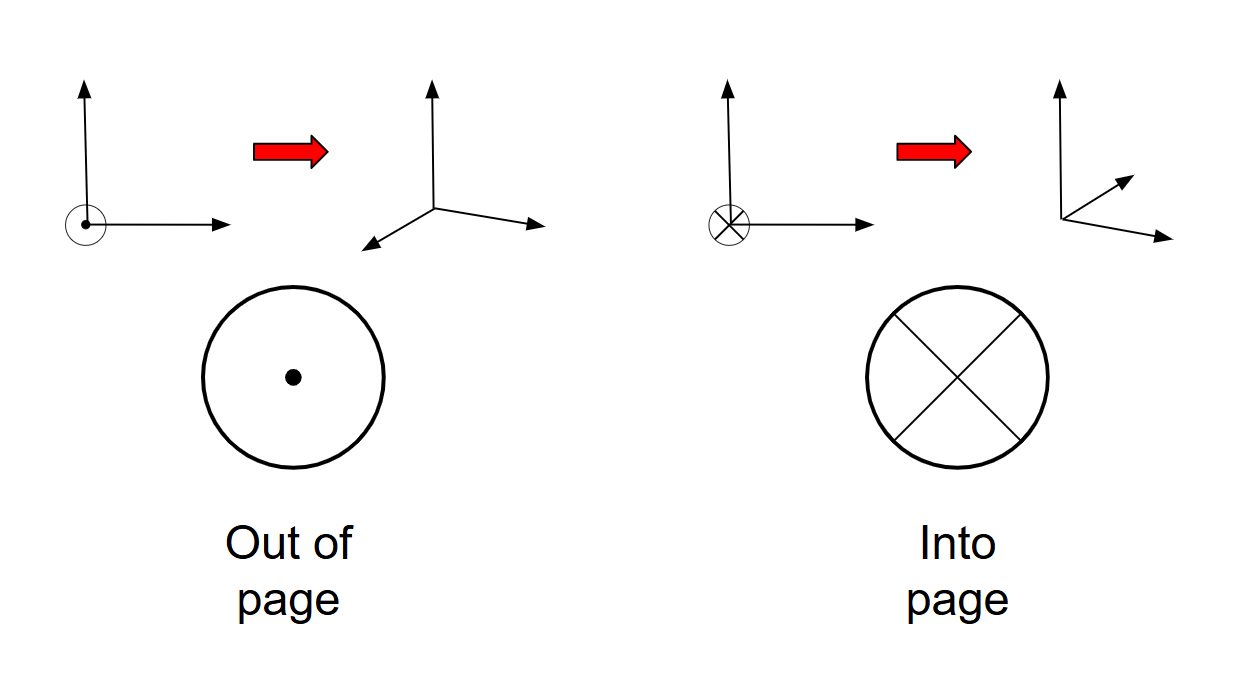
Sign conventions for internal forces and moments
General Stress Sign Convention
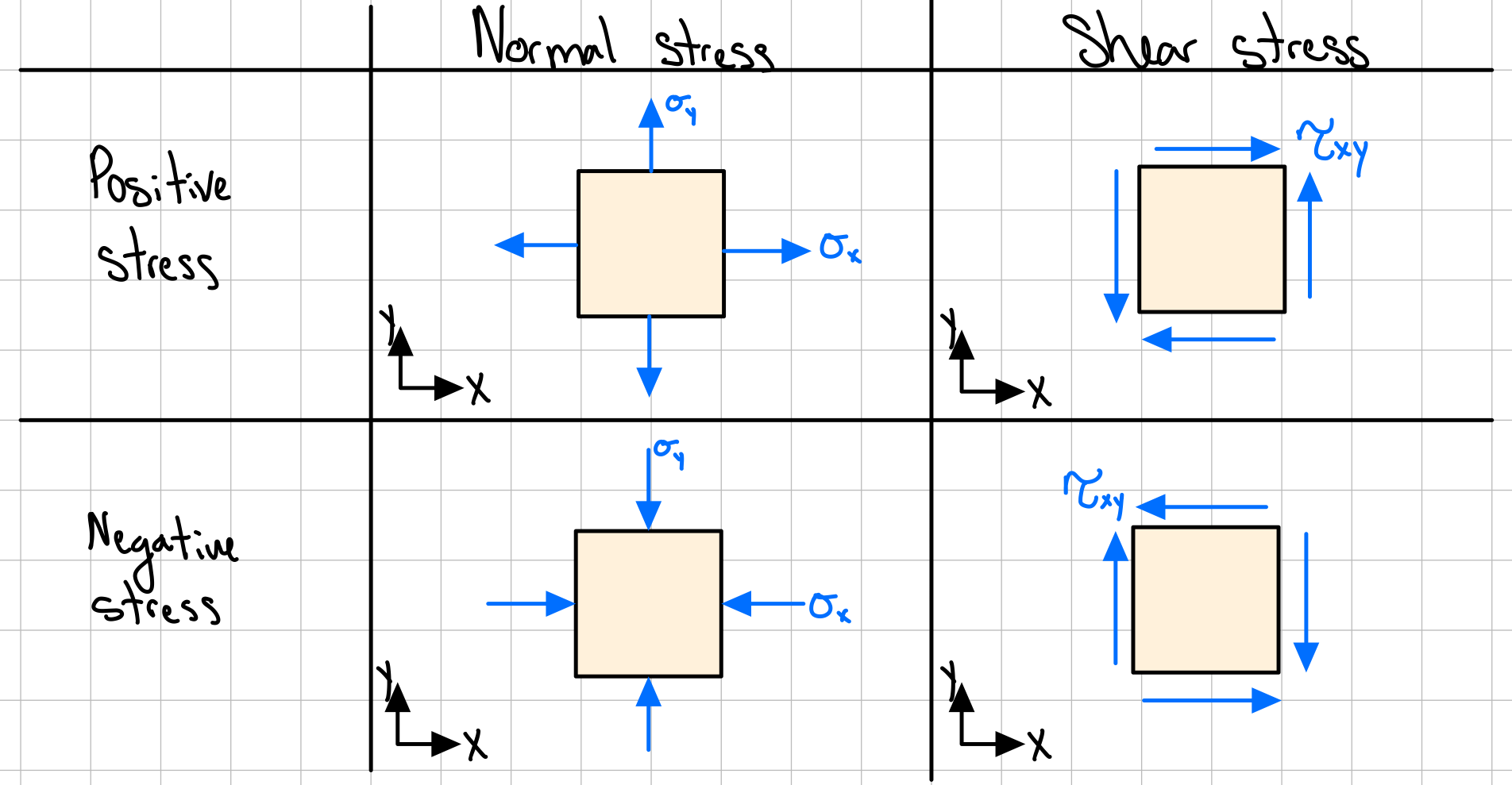
Sign conventions on 2D elements
- Positive normal stress acts outward from all faces.
- Positive shear stress points towards the positive axis direction in a positive face.
- Positive shear stress points towards the negative axis direction in a negative face.
Axial (Normal) Stress
- Tension: \( \sigma > 0 \)
- Compression: \( \sigma < 0 \)
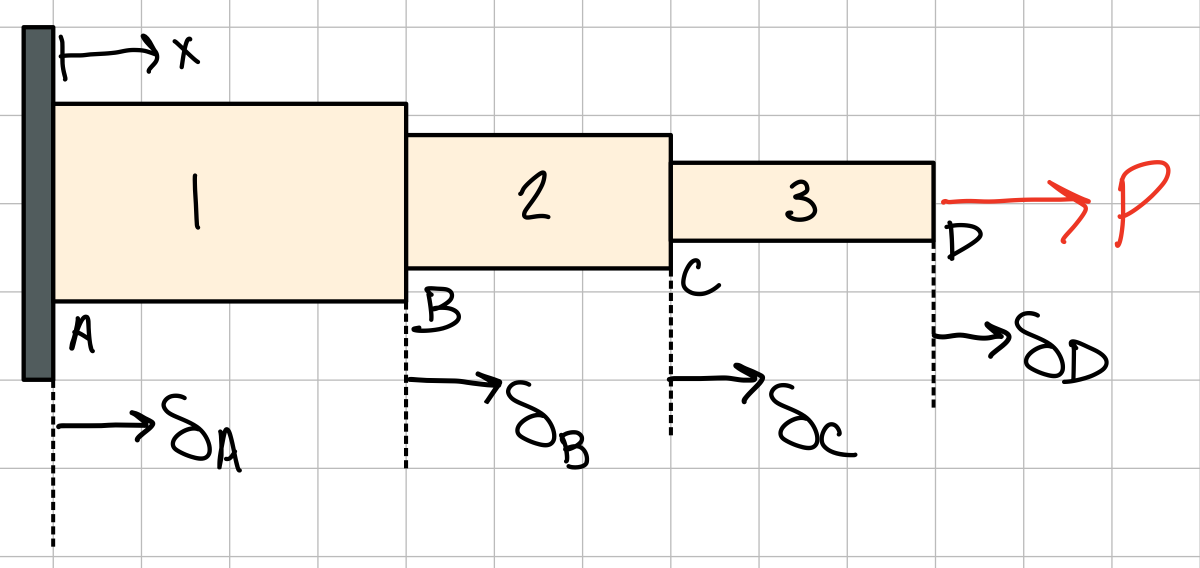
Notation
- Displacement of points in space: the movement of a point relative to its initial position in space (ex; \( \delta_B \) )
- Change in length of a segment: the relative displacement of a point with respect to another point (ex; \( \delta_{B/A} = \delta_B - \delta_A = \delta_1 \) ). This can be written multiple ways:
- \( F>0 \) : tension
- \( F<0 \) : compression
- \( \delta>0 \) : elongation
- \( \delta<0 \) : contraction
Torsion
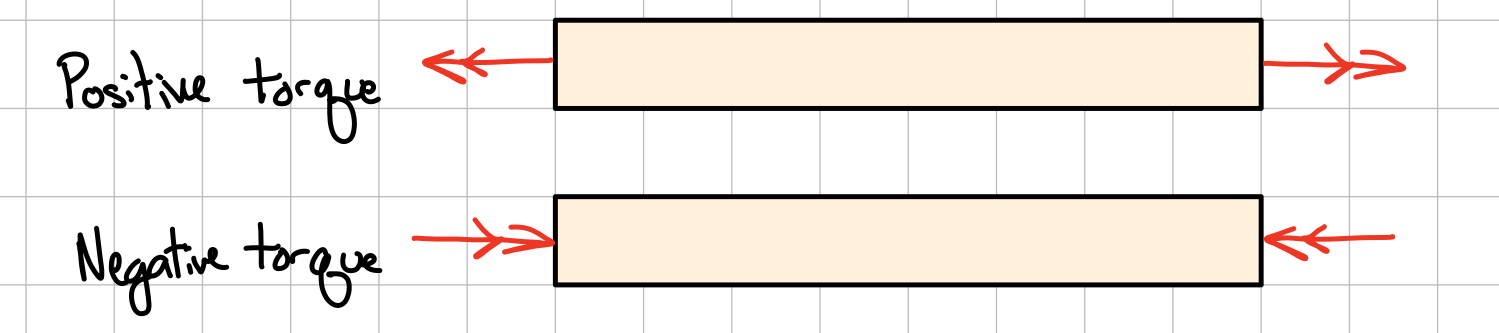
Sign convention for internal toruqe in a shaft
- \( \phi > 0 \) : counter clockwise
- \( \phi < 0 \) : clockwise
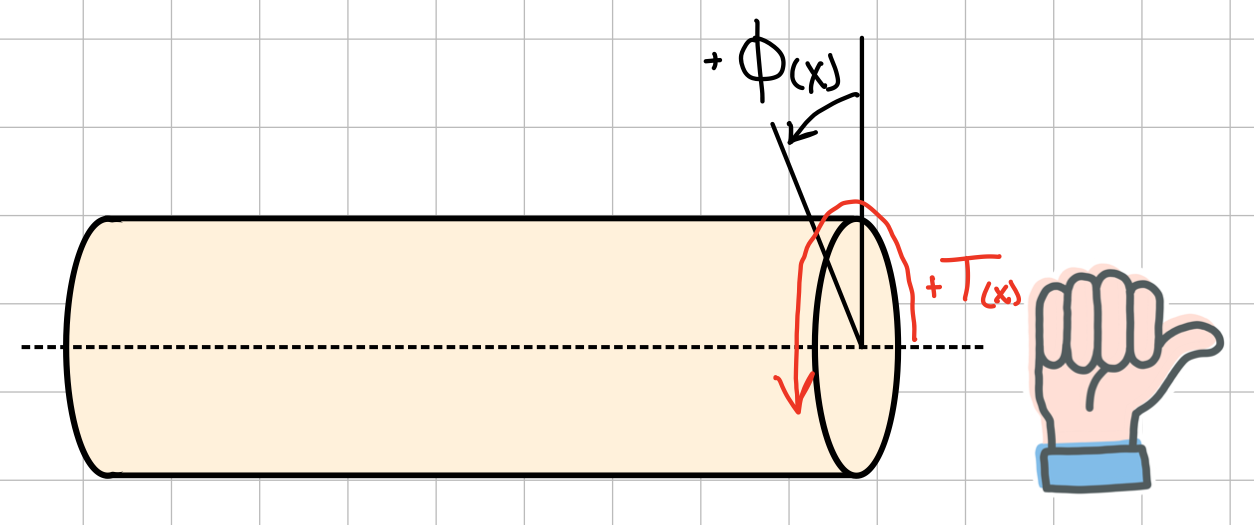
Right hand rule
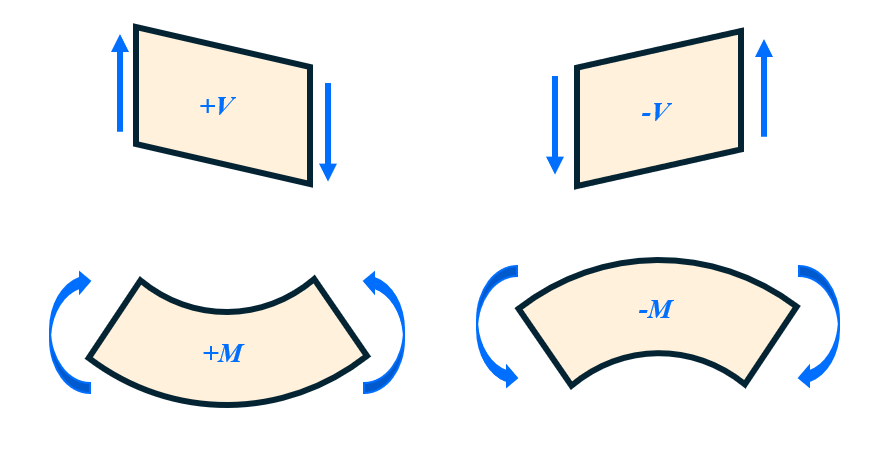
Shear and Moment Diagrams
For the purposes of drawing shear and moment diagrams, the adopted sign conventions for internal forces and moments are shown below. The internal shear force \( V \) and moment \( M \) in a beam are plotted with positive values when they act in the indicated directions with respect to internal surfaces in the beam. These conventions assume the analysis is conducted on a horizontal beam with positive \( x \) axis pointing to the right.